Let's guess what's going on with you right now.
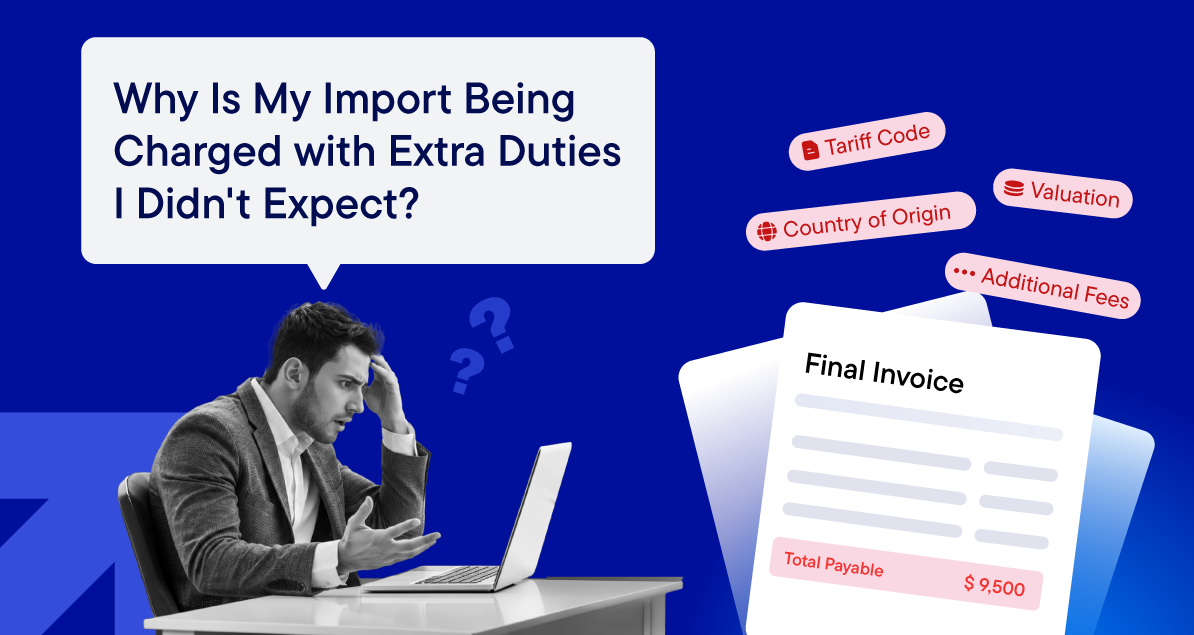
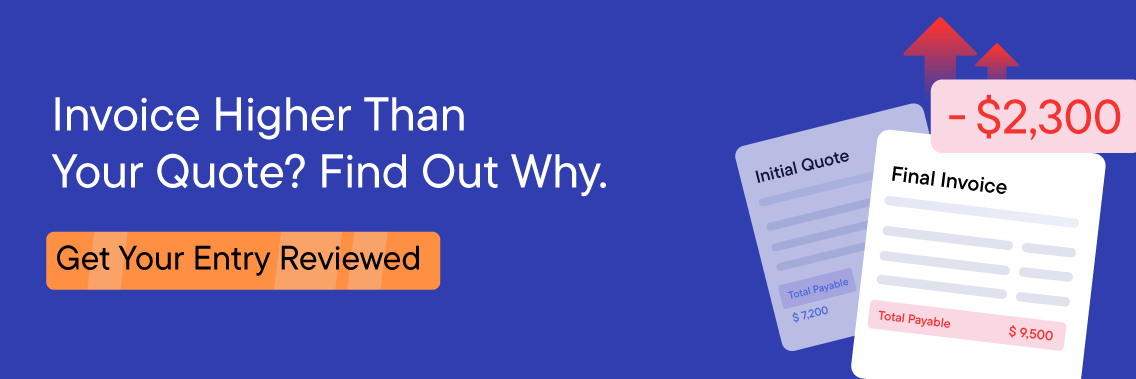
You accepted a quote for a certain duty amount. Then the invoice came in higher than what you agreed to. And now you're wondering where this extra charge even came from.
This can be due to many reasons like wrong tariff code, a missing trade agreement, an issue with where your goods came from, or a tariff change nobody told you about and more.
In this blog, we'll go through the real reasons this happens, how you can find out exactly why it happened to you, and what you can actually do about it.
Why Did Your Duty Amount Increase?
Here's what we mean by "it's never random." Every duty amount CBP charges is based on a specific formula — your product's tariff classification, its declared value, its country of origin, and any trade actions currently in effect.
When your final bill doesn't match your quote, it's because one of those inputs changed, was wrong from the start, or wasn't accounted for when you got your original estimate.
That's actually good news.
It means the extra charge isn't a mystery — it's traceable. Once you know what to look for, you can usually pinpoint exactly which one caused your specific increase. Here are the reasons it happens most often.
1. The Wrong Tariff Code Was Used
Every product gets classified under an HTS (Harmonized Tariff Schedule) code, and that code is what decides your duty rate.
If your broker — or whoever filed your entry — used a code that doesn't quite match your product, you could end up paying a higher rate than you actually owe.
This is one of the most common reasons for a duty mismatch, since HTS codes can be surprisingly specific, and small differences in a product's material or use can shift it into a different, higher-rate category.
2. A Recent Tariff Change Wasn't Factored In
Duty rates aren't fixed forever. Trade actions — like Section 301 tariffs or country-specific measures — can raise rates on certain products with little advance notice.
If your original quote was based on an older rate, and a new tariff kicked in before your shipment entered the country, that difference shows up directly on your invoice.
3. Your Country of Origin Was Misidentified
Duty rates often depend heavily on where a product was actually made — not where it was shipped from.
If your goods were sourced from a country currently facing added tariffs, but that wasn't reflected in your original paperwork or quote, this is often where the gap comes from.
4. Your Customs Valuation Was Off
Duties are calculated as a percentage of your goods' declared value — so if that value was underestimated, missing certain costs (like freight or packaging that should've been included), or simply entered incorrectly, CBP can reassess it at a higher number.
Once that happens, your duty amount adjusts to match the corrected value, not your original one.
5. A Free Trade Agreement Certificate Was Missing
If your goods qualify for reduced or zero duty under a trade agreement, that benefit doesn't apply automatically — it requires the right certificate of origin to be filed with your entry.
Skip that step, or file it late, and you get charged the standard duty rate instead of the reduced one you were actually eligible for.
6. Additional Fees Weren't Included in Your Original Quote
Sometimes what looks like an "extra duty" is really a separate fee that wasn't factored into your initial estimate — like the Merchandise Processing Fee (MPF) or the Harbor Maintenance Fee (HMF).
These aren't duties exactly, but they show up on the same invoice, and if your original quote skipped them, the total looks like it jumped for no reason.
How to Find Out Exactly Why You Were Charged
Now that you know the most common reasons, here's how to actually find out which one applies to your shipment.
- Request your entry summary (CBP Form 7501) from your broker.
- This document breaks down exactly how your duty was calculated — tariff code, declared value, country of origin, and every fee applied. It's the single fastest way to see where the number actually came from.
- Compare it line by line against your original quote
- Whatever changed between the quote and the entry summary is your answer. If the tariff code is different, that's reason #1. If the value is higher, that's reason #4. It's usually that direct.
- Ask your broker specifically which trade actions applied
- If a Section 301 tariff or country-specific measure was added, your broker should be able to point to exactly which one and when it took effect.
- Check whether a trade agreement certificate was filed
- If you believe your goods qualify for a reduced rate, ask directly whether the right certificate was submitted with your entry — this is one of the most overlooked reasons duties come in higher than expected.
- Ask your freight forwarder if they also handle customs clearance directly
- If they do, getting answers is usually faster, since the same company that filed your entry is the one you're asking — instead of chasing down a separate customs broker who wasn't involved in the rest of your shipment.
Once you know the specific cause, you're in a much better position to know whether this was a one-time issue or something that'll keep happening on future shipments.
Can You Get the Extra Duty Back?
In some cases, yes. If the extra duty was caused by a misclassification, a missing trade agreement certificate, or an overpayment tied to broader tariff actions, you may be able to file for a refund rather than accept the charge as final.
This is especially relevant if your import was affected by recent tariff actions like IEEPA-related duties — many importers don't realize they can file a formal refund claim for duties they've already paid, not just avoid them going forward.
It's worth having someone who specializes in duty recovery review your entry before assuming the charge is permanent.
How to Avoid Extra Duty for Future Shipments
Once you know why it happened this time, the goal is making sure it doesn't keep happening. A few things help:
- Confirm your HTS classification before shipping, not after the entry is filed — a quick review upfront can catch a misclassification before it costs you.
- Ask about current trade actions on your specific product and country of origin before you get a quote, since rates can change with little notice.
- File trade agreement certificates proactively if your goods qualify, rather than assuming your broker will catch it automatically.
- Work with a forwarder who reviews your duty estimate in detail, rather than giving you a flat number without a breakdown — that's usually your first sign of whether future invoices will match what you were quoted.
Getting this right upfront is almost always easier than trying to recover money after the fact.
Stop Guessing Why Your Duties Keep Changing
Unexpected duty charges aren't random, but figuring out the exact cause on your own can take time you don't have — especially if you're already dealing with a shipment that's landed and a bill that's higher than planned.
Air 7 Seas handles customs clearance in-house, which means your duty calculations, classifications, and trade agreement filings are reviewed by the same team managing your shipment — not passed off to a separate broker after the fact.
And if you've already been overcharged, A7S Consulting can review your past entries to see if you're owed a refund.
Frequently Asked Questions
- Why did my duty amount not match my original quote?
Quotes are estimates based on the information available at the time. If your tariff classification, valuation, country of origin, or an applicable trade action changed before your entry was filed, your final duty amount can come in higher than the original quote.
- Can I dispute a duty charge with CBP?
Yes, through a formal protest process, but it needs to be filed within a specific timeframe after your entry. This is usually handled by your customs broker or a duty recovery specialist, not directly by you.
- How do I know if I qualify for a duty refund?
It depends on why the extra duty was charged. Misclassifications, missed trade agreement certificates, and certain tariff actions (like IEEPA-related duties) can all be grounds for a refund claim — it's worth having your entry reviewed to find out.
- Does using a broker guarantee I won't get overcharged?
No, but it significantly reduces the risk. A broker who reviews your classification, valuation, and applicable trade actions in detail — before filing — catches most issues before they turn into an unexpected charge.
- What's the fastest way to figure out what happened to my shipment specifically?
Request your CBP Form 7501 entry summary and compare it directly against your original quote — the difference between the two almost always points straight to the cause.