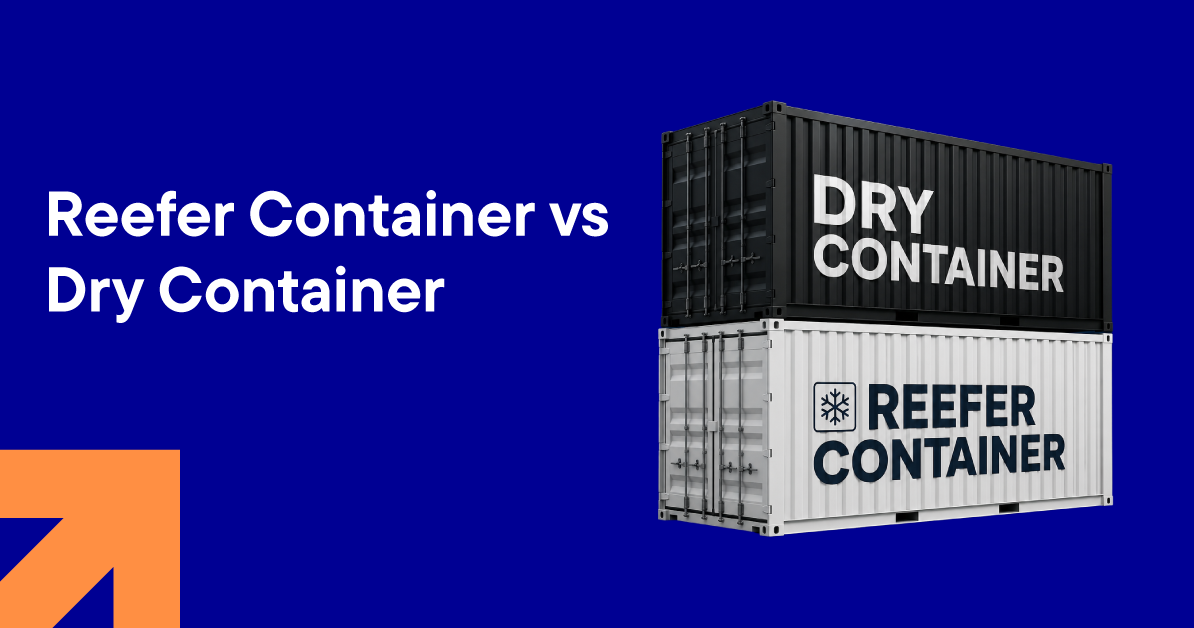
Let's be honest. When most food importers book a shipment for the first time, the container decision comes down to one thing — price. The reefer is more expensive. The dry container is cheaper.
And the product will probably be fine, right?
Sometimes it is. Most of the time it is not.
A dry container has no temperature control. None. Whatever the weather is doing outside that container — scorching heat crossing the equator, humidity sitting at 90% in a tropical port — your product is experiencing all of it. For certain food and beverage products that is a disaster waiting to happen.
And the cost of getting this wrong is not just a spoiled load. It is an FDA detention, a buyer who cancels their next order, and a cargo insurance claim that takes months to resolve.
In this blog we tell you exactly how to make the right container decision for your specific product — before your shipment leaves origin.
What Is a Dry Container
Think of a dry container as a big metal box. That is essentially what it is.
The dry container has just four walls, a roof, a floor, and two doors. Whatever conditions exist outside that container — heat, cold, humidity — exist inside it too. The only thing a dry container does is protect your goods from rain and physical damage during transit.
And for most products that is perfectly fine. Electronics. Machinery. Clothing. Furniture. Dry containers move the majority of the world's goods every single day without any issues.
But food is different. Food is sensitive. And when you put a temperature sensitive food product inside a metal box that is sitting on a vessel crossing the equator in peak summer — the result is predictable.
Your product deteriorates. Your shelf life disappears. And by the time the container opens at the US port you are looking at a load that nobody wants.
The dry container is not a bad option. It is just the wrong option for the wrong product — and the problem is that most first time food importers do not find that out until it is too late.
What Is a Reefer Container
A reefer container looks almost identical to a dry container from the outside. The difference is what is inside the walls.
A reefer container has a built in refrigeration unit that maintains a set temperature throughout the entire journey — from the moment it is loaded at origin to the moment it arrives at the US port.
It does not just cool the container down. It actively manages the temperature the entire way. If the external temperature spikes in a tropical port, the reefer unit compensates. If the vessel sits at anchorage for three days in summer heat, the reefer keeps working.
The temperature range a reefer can maintain is significant. At the chilled end you are looking at temperatures suitable for fresh produce, dairy, and beverages — typically between 2 and 8 degrees Celsius.
At the frozen end you are looking at minus 18 degrees Celsius and below for frozen meat, seafood, and ice cream. Some reefer units can go even lower for pharmaceutical products that require deep freeze conditions.
The other thing a reefer container does that a dry container cannot — it monitors. Temperature logs are recorded throughout the journey. If there is a temperature excursion at any point — a malfunction, a power interruption at a port, a unit that is not performing correctly — there is a record of it.
That record matters for FDA compliance, for cargo insurance claims, and for your buyer who wants proof that the cold chain was maintained from origin to destination.
The Decision Framework — How to Know Which One Your Product Needs
Before you book anything — before you even ask for a freight quote — there are four questions you need to answer about your product. The answers will tell you exactly which container you need.
What is the required storage temperature for your product?
- This is the starting point. Check your product's storage requirements — not what it can tolerate for a short period, but what it needs to maintain quality and safety over a transit that could run 30 days or more.
- If the answer is anything below ambient room temperature — you need a reefer. If your product can sit comfortably at room temperature for the full transit time without quality loss — a dry container may be appropriate.
What is your transit time and what conditions will your container experience along the way?
- A dry container shipping from India to the USA in January is a very different proposition to the same container shipping in June.
- That container will spend weeks on a vessel crossing some of the hottest shipping lanes in the world.
- Internal temperatures inside an unventilated dry container in direct sun can reach 60 to 70 degrees Celsius. If your product cannot survive that — and most food products cannot — the dry container is not an option regardless of what time of year it is.
What does your product's shelf life look like against the transit time?
- A product with a 12 month shelf life and a 30 day transit has room to work with. A product with a 6 week shelf life and a 30 day transit has almost none.
- Factor in customs clearance time at the US port — which can add another week or more — and your product needs to arrive with enough shelf life remaining for your buyer to actually sell it.
- Temperature affects shelf life directly. A product that should last 6 weeks at the right temperature may last 2 weeks at the wrong one.
What are the regulatory requirements for your product category?
- Certain food categories — fresh produce, dairy, meat, seafood — have specific temperature requirements under FDA and USDA regulations.
- Arriving outside those requirements is not just a quality issue. It is a compliance issue. FDA can detain a shipment that arrives outside the required temperature range and depending on the product category the consequences can range from a hold to a full refusal of entry.
Products That Always Need a Reefer Container
Some products have no business being in a dry container. Ever. Regardless of transit time, season, or cost considerations.
Fresh produce
- Fruits and vegetables are living products. They respire, they age, and they deteriorate at a rate that is directly linked to temperature.
- Most fresh produce needs to be maintained between 2 and 8 degrees Celsius throughout the transit.
- A single day above that range can accelerate ripening or decay to the point where the product is unsellable on arrival.
Dairy products
- Milk, cheese, butter, yogurt — all of them require consistent refrigeration throughout the transit.
- Dairy that experiences temperature fluctuations during shipping does not just lose quality. It becomes a food safety issue.
- FDA takes temperature excursions on dairy products seriously and a shipment that arrives outside the required range will not clear without inspection.
Meat and poultry
- Fresh and chilled meat requires strict temperature control throughout the supply chain. Frozen meat requires deep freeze conditions — minus 18 degrees Celsius or below — that only a reefer container can provide.
- The combination of USDA FSIS requirements and the food safety implications of temperature failure make this a non-negotiable category.
Seafood
- Fresh and frozen seafood is among the most temperature sensitive food categories in international shipping.
- A temperature excursion on a seafood shipment does not just affect quality — it creates a genuine public health risk that FDA and USDA will not overlook at the port of entry.
Certain beverages
- Premium juices, cold pressed products, certain alcoholic beverages, and kombucha all require temperature controlled shipping.
- A beverage that is heat sensitive will change in flavour, colour, and quality during a warm transit — and that change is irreversible by the time the product reaches your buyer.
Pharmaceuticals and nutraceuticals
- Certain dietary supplements, probiotics, and pharmaceutical grade products require temperature controlled shipping to maintain potency and efficacy.
- A probiotic supplement that has been exposed to heat during a 30 day ocean transit may have significantly reduced live cultures by the time it reaches the consumer — and that is both a product quality issue and a labeling compliance issue.
Products That Can Use a Dry Container
Not every food and beverage product needs a reefer. And knowing which ones can travel in a dry container safely is just as important as knowing which ones cannot — because reefer containers cost significantly more and if your product does not need one you are paying for something that is not adding value.
The key concept here is shelf stable. A shelf stable product is one that can be stored at room temperature without spoiling — as long as it remains in its original sealed packaging. These products have been processed, preserved, or packaged in a way that removes the need for refrigeration during transit.
Canned and tinned goods
- Canned vegetables, canned fish, canned sauces — anything that has been heat processed and sealed in an airtight container is shelf stable. As long as the packaging remains intact, temperature fluctuations during transit will not affect the product inside.
Dried goods
- Rice, lentils, dried beans, dried pasta, dried spices — products with very low moisture content are naturally resistant to the kind of microbial growth that causes spoilage. As long as they are properly packaged and protected from moisture, a dry container is appropriate.
Confectionery
- Most packaged confectionery — chocolate being a notable exception in extreme heat — travels well in a dry container. Biscuits, candies, and packaged snacks with low moisture content and appropriate packaging are generally suitable for ambient temperature shipping.
Packaged sauces and condiments
- Commercially produced sauces, condiments, and dressings that have been processed and sealed are typically shelf stable. Hot sauce, soy sauce, vinegar based products — these travel well in dry containers as long as they are properly packaged.
Certain alcoholic beverages
- Spirits with high alcohol content are naturally shelf stable and do not require temperature control during transit. Wine is more sensitive and may benefit from temperature controlled shipping on longer routes — but most spirits travel fine in a dry container.
The caveat across all of these is packaging integrity and ambient temperature exposure. Even shelf stable products have limits.
A container sitting in a port in the Middle East in summer can reach internal temperatures that affect even products that do not technically require refrigeration.
If you are shipping through extreme climate zones, it is worth discussing controlled temperature options with your freight forwarder even for shelf stable products.
The Hidden Costs of Getting This Decision Wrong
Let's talk about what actually happens when a food importer chooses the wrong container — because the consequences go well beyond a spoiled load.
Product loss
- The most obvious cost. A full container of fresh produce, dairy, or seafood that arrives outside the required temperature range is unsellable.
- The entire load is a write off. Depending on the value of the product you are looking at a loss that runs into tens of thousands of dollars on a single shipment.
FDA detention
- Temperature sensitive food products that arrive outside the required range are subject to FDA detention.
- That means your cargo sits at the port while FDA investigates. Storage and demurrage charges accumulate daily.
- And if FDA determines the product poses a food safety risk — which temperature excursions on certain categories automatically trigger — you are looking at a refusal of entry and either re-export or destruction of the entire load.
Buyer relationship damage
- Your buyer placed an order expecting product that meets their quality specifications. A shipment that arrives temperature damaged, with reduced shelf life, or with obvious quality deterioration does not meet those specifications.
- The immediate financial loss is significant. The long term damage to the buyer relationship — particularly if this is your first shipment to a new customer — can cost you far more than the value of that single container.
Cargo insurance complications
- If you chose a dry container for a product that clearly required refrigeration, your cargo insurance claim becomes complicated.
- Insurers will look at whether the correct container type was selected for the product being shipped. If the answer is no — your claim may be denied or significantly reduced.
- Getting the container decision right is not just a logistics decision. It is an insurance decision.
Re-shipment costs
- If the load is a total loss, you are not just losing the product. You are paying for the freight again, the customs brokerage again, the port charges again — and this time you are also dealing with a buyer who has been waiting and may have already found an alternative supplier.
What to Ask Your Freight Forwarder Before You Book
After everything covered in this blog — the decision framework, the product categories, the hidden costs of getting it wrong — the final piece is making sure the freight forwarder you choose actually knows what they are doing when it comes to temperature sensitive food cargo.
Not every freight forwarder has deep experience with food and beverage shipping. A generalist forwarder who handles food occasionally is not the same as one who manages temperature sensitive cargo as part of their core business. Here is what to ask before you commit.
Do you have experience with my specific product category?
Fresh produce, dairy, seafood, pharmaceuticals — each category has its own temperature requirements, its own regulatory compliance considerations, and its own risk profile. Your forwarder should be able to speak specifically to your product — not just to reefer containers in general.
How do you monitor reefer performance during the transit?
A reefer container that malfunctions mid voyage without anyone noticing is a total loss waiting to happen. Your forwarder should have a process for monitoring temperature logs throughout the journey — not just at origin and destination but throughout the entire transit.
What happens if the reefer unit malfunctions?
This is the question most importers never ask. If the refrigeration unit fails mid voyage, what is the protocol? How quickly can the issue be identified? What options exist for transferring cargo to a functioning unit? A forwarder with genuine reefer experience has answers to these questions. One without will hesitate.
How is last mile temperature controlled delivery handled?
The ocean transit gets all the attention but the last mile — from the port to your warehouse or distribution centre — is where cold chains most commonly fail. Make sure your forwarder has temperature controlled trucking partners at the US destination end, not just ocean freight capability.
Why Air 7 Seas for Your Next Perishable Shipment
You have spent this entire blog understanding the difference between a reefer and a dry container.
You understand the decision framework. You know which products need temperature control and which ones do not. You understand what getting it wrong actually costs.
Now the question is who do you trust to get it right.
Perishable food shipping is not a service you want to learn on the job. Every transit has variables — ports with power interruptions, vessels that arrive late, customs examinations that add days to a timeline that was already tight against your product's shelf life.
The international freight forwarder managing your perishable shipment needs to have seen those situations before — and know exactly what to do when they happen.
Here is what Air 7 Seas brings to every perishable food shipment:
40+ years of experience moving temperature sensitive food and beverage cargo from 150+ countries into the USA. We have handled fresh produce, dairy, seafood, pharmaceuticals, and beverages across every major trade lane into the US market.
Active reefer monitoring throughout the transit. We do not book the container and consider our job done. Our team monitors reefer temperature performance throughout the journey — so a malfunction is caught early, not discovered when the container is opened at the US port.
Full cold chain management end to end. Ocean freight is one part of the journey. We manage the full cold chain — from the moment your product leaves the foreign facility through to temperature controlled last mile delivery at your US warehouse or distribution centre.
Licensed customs brokerage with food and beverage expertise. FDA Prior Notice, USDA permits, temperature compliance documentation — we handle every regulatory requirement on the US end so your perishable cargo clears without a hold.
One point of contact from origin to delivery. No handoffs between a freight team and a separate customs team. One team with full visibility of your shipment — and full accountability for every step of the cold chain.
Your product took time, investment, and care to produce. It deserves a freight partner who treats the journey to the US market with the same level of attention.
Frequently Asked Questions
1. What is the main difference between a reefer container and a dry container? A dry container is a standard shipping container with no temperature control. Whatever conditions exist outside the container exist inside it too. A reefer container has a built in refrigeration unit that actively maintains a set temperature throughout the entire journey — from origin to destination. For temperature sensitive food and beverage products the difference between the two is the difference between a product that arrives in sellable condition and one that does not.
2. How cold can a reefer container get? Reefer containers can maintain temperatures across a wide range — from chilled settings of around 2 to 8 degrees Celsius for fresh produce and dairy, down to minus 18 degrees Celsius and below for frozen meat, seafood, and ice cream. Some specialised reefer units can maintain even lower temperatures for pharmaceutical grade products requiring deep freeze conditions.
3. Can I use a dry container for shelf stable food products? Yes — shelf stable products like canned goods, dried grains, packaged sauces, spirits, and confectionery can generally travel in a dry container. The key consideration is whether the product can tolerate ambient temperature fluctuations throughout the transit without quality loss. Even shelf stable products have limits — a container crossing tropical shipping lanes in summer can reach extreme internal temperatures that affect certain products. Always discuss your specific product with your freight forwarder before booking.
4. What happens if the reefer unit malfunctions during transit? A reefer malfunction mid voyage is one of the most serious situations in perishable food shipping. If the temperature excursion is caught early there may be options to transfer the cargo to a functioning unit or take corrective action at the next port. If it is not caught until the container is opened at the destination — the load may be a total loss. This is why active reefer monitoring throughout the transit is essential — not just checking the unit at origin and destination.
5. Does FDA check the temperature of food shipments at the US port? FDA has the authority to inspect temperature sensitive food shipments at the US port of entry. For regulated product categories — fresh produce, dairy, meat, seafood — arriving outside the required temperature range can trigger a detention. Depending on the product and the severity of the temperature excursion FDA can require the shipment to be re-exported or destroyed. Maintaining an unbroken cold chain throughout the transit is both a quality requirement and a regulatory compliance requirement.
6. Is reefer shipping significantly more expensive than dry container shipping? Reefer containers do carry a cost premium over dry containers — typically 20 to 40 percent more depending on the trade lane, time of year, and availability. However the cost comparison needs to be made against the full risk of using a dry container for a product that requires temperature control. The freight saving on a dry container is insignificant compared to the cost of a spoiled load, an FDA detention, or a damaged buyer relationship. For products that genuinely require refrigeration the reefer is not the more expensive option — it is the only option.
7. Does Air 7 Seas handle last mile cold chain delivery in the USA? Yes — Air 7 Seas manages the complete cold chain from origin through to your US warehouse or distribution centre. This includes temperature controlled trucking from the US port to your final destination. The last mile is where cold chains most commonly fail — a product that has been maintained perfectly throughout a 30 day ocean transit can be compromised in a two hour trucking leg if the right equipment is not in place. Air 7 Seas ensures the cold chain is maintained end to end — not just on the ocean.