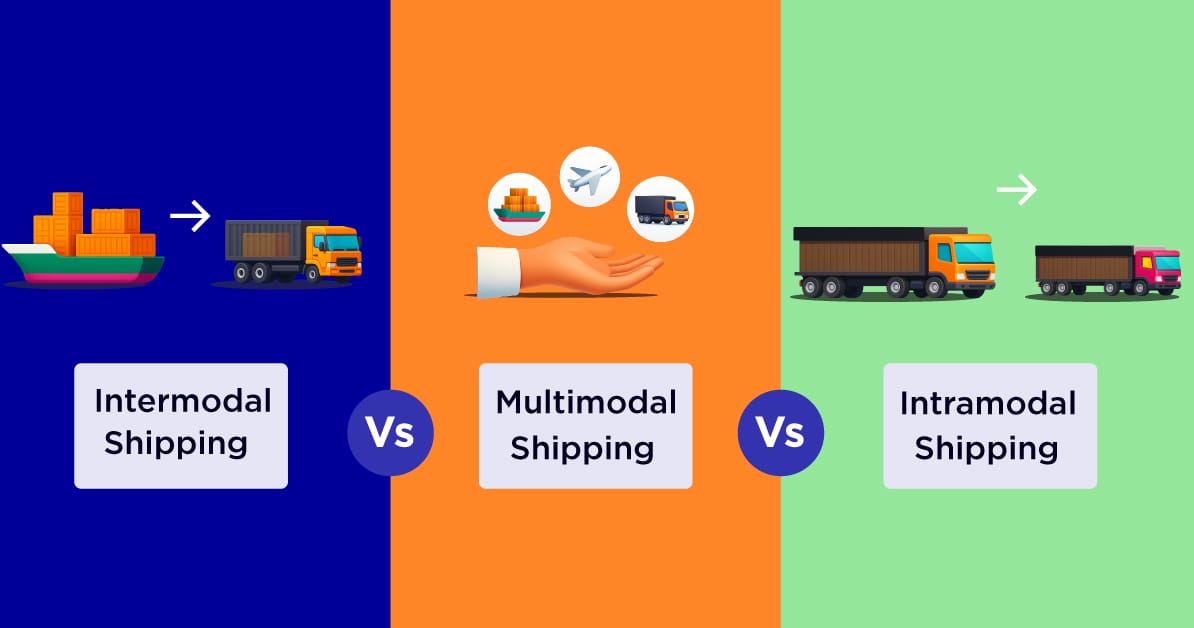
Ever feel like the logistics world has too many “-modals”?
Intermodal, multimodal, intramodal — they sound almost identical, but choosing the wrong one can cost your business valuable time, money, and a few headaches along the way.
Getting these right isn’t just about logistics jargon — it’s about cutting costs, finding the smartest routes, and choosing the mode of transport that actually works for your business.
Let's dig in one after the other.
Quick note before we start
Before we get into the differences, let’s clear one big misconception — if you think multimodal and intermodal are differentiated by the mode of transport, sorry, that’s not it.
Both intermodal and multimodal use two or more modes of transport — like truck + rail, or sea + air. That’s exactly why they sound confusing.
The real difference?
So, the difference is not about what type of transport you use, but rather how the shipment is managed and who takes responsibility.
What These “-Modals” Really Mean
Let’s clear the fog.
These terms may sound like they belong in a logistics textbook, but in reality, they’re just different ways to move your freight from Point A to Point B — each with its own perks and trade-offs.
Here’s the quick breakdown:
- Intermodal Shipping → Think of it like a relay race. Your cargo changes hands between different carriers — say, from rail to truck — but it stays in the same container the whole time. You’re managing multiple contracts, but you gain flexibility and often save on long-distance costs.
- Multimodal Shipping → Imagine buying a single ticket that covers your flight, train, and taxi. One carrier handles everything under a single contract, making your paperwork (and stress) lighter.
- Intramodal Shipping → This one stays within a single mode, like truck-to-truck or rail-to-rail. Different providers, same mode — great for optimizing rates and capacity on domestic routes.
In short: Intermodal = many carriers. Multimodal = one carrier. Intramodal = same mode.
Intermodal shipment
Your cargo moves through two or more modes of transport (say, rail + truck), but it stays in the same container the entire journey.
The handoff happens between different carriers, which means you’ll have separate contracts for each leg of the trip.
Here’s how it works:
- Let’s say you’re shipping frozen food from Toronto to Houston.
- You book with CN Rail to move your refrigerated container from Toronto to Chicago.
- That’s your first contract — between you and the rail carrier.
- Once it reaches Chicago, you book a trucking company to deliver the same container from Chicago to Houston.
- That’s your second contract — between you and the trucking carrier.
- Both carriers are responsible only for their own leg of the trip.
- If something goes wrong during the rail journey, it’s on the rail carrier; if it happens on the road, it’s on the trucking company.
Multimodal Shipping
Now, let’s talk about multimodal shipping — the more “hands-off” version of intermodal.
Like intermodal, multimodal shipping also uses two or more modes of transport — say, sea + rail + truck.
But here’s the key difference: you sign just one contract and deal with only one carrier or logistics provider from start to finish.
That single provider — known as the Multimodal Transport Operator (MTO) — takes care of the entire journey.
They're responsible for every leg, every carrier switch, and every customs checkpoint. If something goes wrong, you don’t chase multiple transport companies — your MTO handles it all.
Example:
- Let’s say you’re shipping frozen food from Toronto, Canada to Dallas, Texas.
- In a multimodal setup:
- You hire one logistics company.
- They manage the truck from Toronto to Montreal, rail from Montreal to Chicago, and truck again from Chicago to Dallas.
- You have one bill of lading, one point of contact, and one overall contract.
- Even though your goods move through different modes of transport and carriers behind the scenes, you never deal with them directly.
Intramodal Shipping?
Now, here’s where things get simpler — intramodal shipping.
If intermodal and multimodal both mix different transportation modes, intramodal stays within one mode. That means the entire shipment moves using just trucks, or just trains, or just ships — but may involve different carriers within that same mode.
So basically, your freight isn’t switching from rail to road or sea to air — it’s just moving between providers who operate the same type of transport.
Example:
- Let’s say you’re moving a load of furniture from Vancouver to Miami entirely by truck.
- One trucking company hauls it from Vancouver to Chicago.
- Another takes over from Chicago to Miami.
- Both are trucking carriers, so the mode never changes — only the service provider does.
That’s intramodal: one mode, multiple carriers.
It’s commonly used in domestic or regional logistics, especially when:
- You want competitive pricing by switching carriers mid-route.
- You’re avoiding mode transfers to keep handling and risks low.
Intermodal vs Multimodal vs Intramodal: What’s the Difference?
By now, you’ve probably noticed — all these “-modals” sound similar, but the difference lies in how the shipment is managed, how many contracts are involved, and what modes of transport are used.
Here’s a simple breakdown that clears it all up 👇
Final Take
At its core, logistics isn’t about whether you choose intermodal, multimodal, or intramodal — it’s about how efficiently your cargo moves from Point A to Point B while balancing cost, speed, and control.
Each approach solves a different problem:
- Intermodal helps you customize cost and carrier choice.
- Multimodal simplifies coordination and compliance.
- Intramodal keeps things straightforward when one mode gets the job done.
But the real advantage comes from knowing when and how to use each — because no two shipments, routes, or timelines are ever the same.
That’s where an experienced freight forwarder becomes invaluable. They don’t just move goods; they design smarter logistics strategies, manage the paperwork, and keep your supply chain running seamlessly across modes, borders, and schedules.
In a world where one missed handoff can delay an entire supply chain, having the right strategy — and the right partner — can make all the difference.
Frequently Asked Questions
Here are relevant FAQs for this blog:
Frequently Asked Questions
1. What is the main difference between intermodal and multimodal shipping?
The key difference is in contracts and responsibility. Intermodal shipping involves multiple contracts with different carriers for each leg of the journey, while multimodal shipping uses a single contract with one Multimodal Transport Operator (MTO) who manages the entire route.
2. Is intermodal or multimodal shipping cheaper?
It depends on your needs. Intermodal can be more cost-effective if you optimize each leg by choosing the cheapest carrier, but multimodal may save money overall by reducing administrative costs and simplifying logistics management.
3. What does intramodal shipping mean?
Intramodal shipping uses only one mode of transportation (like truck-only or rail-only) but may involve different carriers within that same mode. It's commonly used for domestic or regional shipments.
4. Do both intermodal and multimodal use multiple modes of transport?
Yes, both use two or more transportation modes (such as rail, truck, sea, or air). The difference isn't in the modes used, but in how the shipment is managed and who takes responsibility.
5.What is a Bill of Lading (BOL) and how does it differ across shipping types?
A Bill of Lading is a legal document between the shipper and carrier. In intermodal shipping, you get separate BOLs for each leg. In multimodal shipping, you receive one combined BOL covering the entire trip. In intramodal, you'll have separate invoices or contracts for each carrier.