
You booked your move for $3,200. The final invoice said $4,750. You call your forwarder, and they explain it as accessorial charges — maybe a liftgate was needed to unload the truck, or your furniture needed a custom crate for customs. Chances are, something like this has happened to your shipment too.
Here's the thing: it's not the forwarder's mistake, and it's not yours either. These are real charges tied to real parts of your move — the address, the furniture, the container
In this blog, we're breaking down all 15 accessorial fees that can show up on a moving quote, what triggers each one, and how to know what to expect before your final bill does.
What Is an Accessorial Fee?
An accessorial fee is any charge added on top of your base moving quote for something extra your specific move needed — not a hidden cost, just one that only applies in certain situations.
Every shipment is different, so these fees vary depending how your shipment moves through the process. Here are the 15 you're most likely to run into.
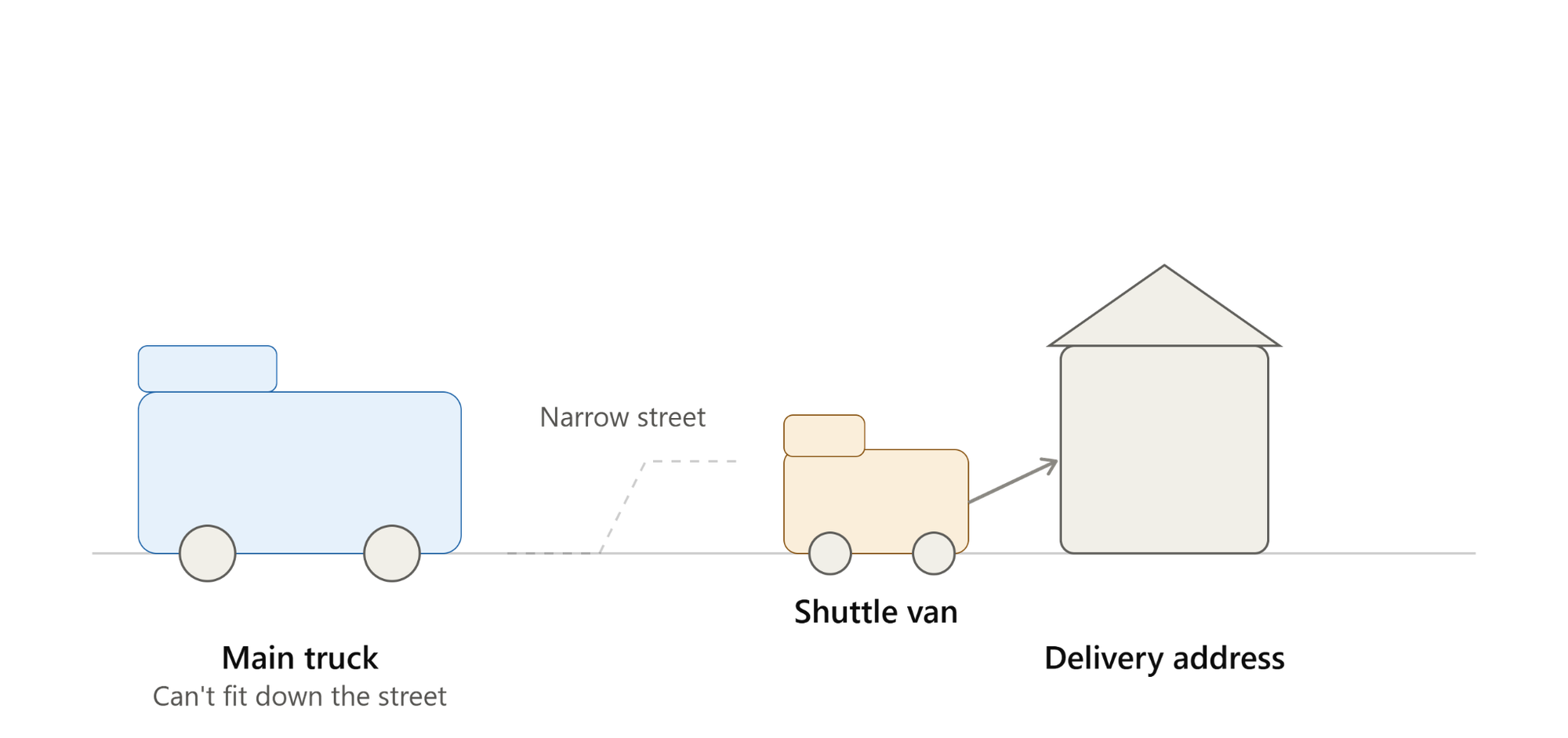
1. Shuttle Fee Charged when the moving truck can't get close enough to your pickup or delivery address — a narrow street, low bridge, or building restriction means a smaller vehicle has to shuttle your goods the rest of the way.
2. Liftgate Fee Applies when there's no loading dock and the truck needs a mechanical lift to get your shipment on or off safely — common for larger or heavier items.
3. Residential Delivery Fee Delivering to a home costs more than delivering to a business address, since residential stops usually take more time and don't have loading equipment on-site.
4. Long Carry Fee If the crew has to carry your belongings a long distance from the truck to your door — think long driveways or far-away parking — this fee covers the extra labor and time.
5. Stair Carry / Elevator FeeCharged when your move involves stairs or a building elevator that has to be reserved and used, since it slows the crew down and adds handling risk.
6. Waiting Time / Detention Fee If the moving truck or crew shows up on time but has to wait — because you're not ready, parking isn't available, or building access takes longer than expected — this fee covers the extra time. It's built into most quotes as an allowance (say, 30 minutes free), with charges kicking in after that.
7. Packing Fee Covers the cost of the moving crew packing your belongings for you instead of you doing it yourself. It usually includes materials — boxes, tape, wrapping paper — plus the labor to pack everything safely for transit.
8. Crating Fee A custom wooden crate built around fragile, oversized, or high-value items — furniture, artwork, mirrors, electronics — to protect them during transit and meet destination customs requirements for international shipments.
9. Fumigation / Treatment Fee Wood packaging (crates, pallets) used in international shipping often has to be heat-treated or fumigated to meet customs rules and prevent pests from crossing borders. This fee covers that treatment and the certification proving it was done.
10. Storage-in-Transit (SIT) Fee If your shipment needs to sit in a warehouse temporarily — because your new place isn't ready, or there's a gap between pickup and final delivery — this fee covers the storage time before it's delivered.
How to Avoid Surprise Fees on Your Next Move
- Ask for an itemized quote, not a flat number. A single total tells you nothing about what's included. An itemized breakdown shows exactly which accessorial fees could apply to your move.
- Describe your pickup and delivery locations in detail. Mention stairs, elevators, long driveways, parking restrictions, or narrow streets upfront — these are exactly what trigger shuttle, liftgate, and long carry fees.
- Ask directly what your furniture or items will need. Pianos, artwork, and antiques often need crating or special handling — get this confirmed before moving day, not after.
- Clarify what happens if your new place isn't ready. If there's a chance your shipment needs to sit in storage, ask about SIT fees before they show up as a surprise.
- Understand your port's free time. If you're shipping internationally, ask how many free days you get before demurrage or detention charges start.
- Get everything in writing. A forwarder who's upfront about potential fees before you book is one you can trust to be upfront about your final invoice too.
The goal isn't to avoid every accessorial fee — some are unavoidable depending on your specific move. It's to know which ones might apply to you, so your final bill matches what you expected, not what surprised you.
At AIR 7 SEAS, we build quotes around your actual shipment, not a generic estimate:
- Every quote is itemized upfront — so you see exactly which accessorial fees could apply before you book, not after your invoice arrives.
- We ask the right questions early — access conditions, item type, delivery address — so fees like shuttle, liftgate, or crating are flagged in advance, not discovered on moving day.
- Our team explains every charge in plain language — no fine print, no fees buried in a contract you never read.
- 40+ years of experience means we've seen almost every scenario — narrow streets, no-elevator buildings, oversized furniture — so your quote already accounts for what your specific move actually needs.
With Air 7 Seas, the number you're quoted is the number you should expect to pay.
Frequently Asked Question
- What are accessorial fees in a moving quote?
Accessorial fees are extra charges added to your base moving cost for specific circumstances your move requires — like a truck that can't reach your address, furniture that needs a custom crate, or a container held at port longer than expected.
- Are accessorial fees the same for every move?
No. They depend on your specific shipment — your pickup and delivery address, the type of items you're moving, and whether you're shipping domestically or internationally. Not every move triggers every fee.
- Can I avoid accessorial fees completely?
Some, yes — but not all. Fees tied to your address (like shuttle or long carry fees) can sometimes be avoided by choosing pickup/delivery points with easier access. Others, like customs clearance or crating for international shipments, are often unavoidable.
- Why didn't my initial quote include these fees?
Base quotes usually reflect a standard move. Accessorial fees only apply once your specific circumstances are known — which is why an itemized quote, built around your actual shipment, gives a more accurate picture upfront.
- How can I make sure my final bill matches my quote?
Ask for an itemized breakdown, describe your pickup and delivery locations in detail, and confirm ahead of time whether any of your items need special handling like crating or fumigation.