You have decided to ship your car from India to the USA. But you now have a hundred questions and nobody is giving you straight answers.
How much is this going to cost? How long will it take? Will my car even be allowed into the USA? What happens at customs?
We hear these questions every single day from Indian car owners planning their move to the USA. So we put together the 11 most common ones — and answered every single one of them honestly, in plain English, with no jargon and no runaround.
Question 1 — How Much Does It Cost to Ship a Car From India to the USA?
The cost depends on several factors — the mode of shipping you choose, the origin port in India, the destination port in the USA, and the size of your vehicle.
RoRo shipping is generally the more affordable option. Container shipping costs more but offers better protection for your car during transit.
On top of freight you need to factor in insurance, customs duty, port charges, and last mile delivery from the US port to your new address.
Car shipping from India to the USA is a meaningful expense. The best way to get an accurate number for your specific vehicle and route is to get a quote directly from an international freight forwarder who handles vehicle shipping regularly.
Question 2 — How Long Does It Take to Ship a Car From India to the USA?
Ocean transit from India to the USA takes 18 to 28 days depending on your origin and destination ports. Mumbai to Los Angeles runs shorter than Mumbai to New York.
But sailing time is not the same as door to door time.
Add 5 to 7 days for export preparation and port loading in India. Add another 3 to 7 days for US customs clearance on arrival. Add last mile delivery from the US port to your new address.
A realistic door to door timeline from India to the USA is 35 to 50 days in normal conditions. Build your relocation timeline around that number — not the minimum sailing time.
Question 3 — What Documents Do I Need to Ship My Car From India to the USA?
Documentation is where most car shipments run into problems. Get this wrong and your vehicle gets held at the US port.
Here is what you need:
- Original vehicle registration certificate
- Valid title proving ownership
- Passport copy and valid US visa or residency documentation.
- Bill of lading issued by the shipping line
- Commercial invoice showing the declared value of the vehicle.
- EPA Form 3520-1 and DOT Form HS-7 — both required for US customs clearance on all imported vehicles.
Missing even one of these documents means your car sits at the port while storage charges accumulate. A licensed customs broker reviews every document before your vehicle ships — not after it arrives.
Question 4 — Can I Bring My Indian Car to the USA Permanently?
Yes — but with conditions.
Your car must meet US safety and emissions standards set by the EPA and DOT. Most Indian vehicles are manufactured to different standards and may require modifications to comply.
Some vehicles simply cannot be modified to meet US requirements — in which case they cannot be permanently imported.
There is also the 25 year rule. Vehicles that are 25 years or older are exempt from EPA and DOT compliance requirements and can be imported without modifications. If your car is newer than 25 years it needs to meet current US standards or go through a Registered Importer for modification.
Check your specific vehicle's compliance status before you book anything.
Question 5 — What Are the EPA and DOT Requirements for Importing a Car From India to the USA?
Every vehicle entering the USA permanently must meet two sets of requirements.
EPA — Environmental Protection Agency — requires your vehicle to meet US emission standards. If your car was not manufactured for the US market it may not comply. A Registered Importer can modify the vehicle to meet EPA standards but this adds cost and time.
DOT — Department of Transportation — requires your vehicle to meet US Federal Motor Vehicle Safety Standards. Again most Indian market vehicles do not meet these out of the factory.
Both agencies require specific declaration forms at the time of US customs entry. Your customs broker files these on your behalf — but the compliance question needs to be answered before your car leaves India.
Question 6 — RoRo vs Container Shipping — Which One Should I Choose for My Car?
This is one of the most common questions from first time car shippers — and the answer depends on what matters most to you.
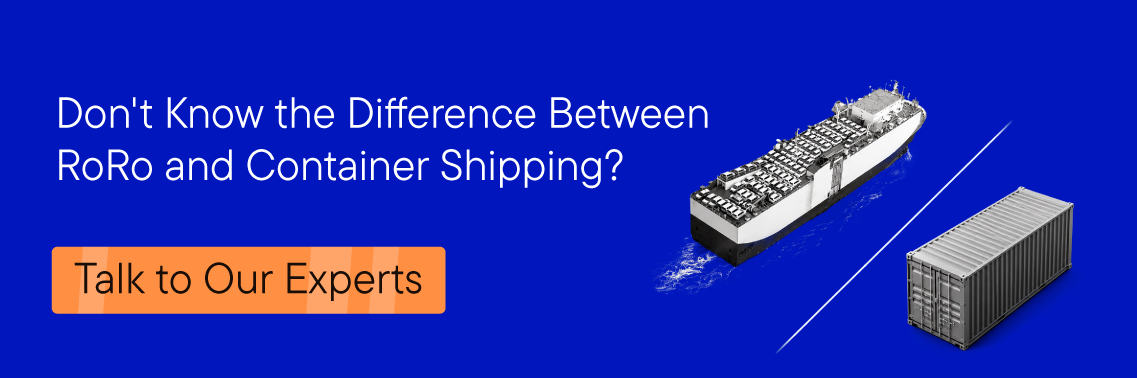
RoRo — Roll on Roll off — means your car is driven onto the vessel and secured on an open deck alongside hundreds of other vehicles. It is generally more affordable and widely available on India to USA routes. The trade off is that your car is exposed to the elements throughout the transit.
Container shipping means your car travels inside a sealed steel container — fully protected from weather, salt air, and physical contact with other vehicles. It costs more but offers significantly better protection for high value or classic vehicles.
For most standard passenger vehicles RoRo is perfectly adequate. For luxury, vintage, or high value cars container shipping is the smarter choice.
Question 7 — Which Port in India Should I Use to Ship My Car to the USA?
The right origin port depends on where you are located in India and which US destination port makes sense for your final address.
The main ports handling vehicle exports from India are Nhava Sheva — Mumbai — and Chennai. Nhava Sheva is the most commonly used for car exports and has regular RoRo and container services to US ports. Chennai is the better option if you are located in South India.
For US destination ports — Los Angeles and Long Beach on the West Coast are the fastest options from India. New York, Baltimore, and Savannah serve the East Coast and are better suited if your final destination is on the eastern side of the USA.
Your international freight forwarder recommends the best port combination for your specific origin and destination — factoring in transit time, cost, and vessel availability.
Question 8 — Will My Car Meet US Emission Standards When It Arrives?
This is the question most people do not ask until it is too late.
Most Indian market vehicles are manufactured to Bharat Stage emission standards — not US EPA standards. These are different. A car that is perfectly legal to drive in India may not meet the emission requirements to be permanently imported into the USA.
Before you ship anything get your specific vehicle's make, model, and year checked against EPA compliance requirements. If your car does not comply you have two options — hire a Registered Importer to modify it to meet US standards, or reconsider whether shipping makes financial sense given the modification costs involved.
This conversation needs to happen before your car leaves India — not at the US port.
Question 9 — What Customs Duty Will I Pay on My Car When It Arrives in the USA?
The customs duty on a privately imported passenger vehicle entering the USA is generally 2.5% of the car's declared value. For trucks and certain commercial vehicles the rate is higher.
On top of customs duty you are also looking at a merchandise processing fee and a harbour maintenance fee — both calculated as a percentage of the declared value.
The declared value needs to be accurate and supportable. CBP has the authority to question a declared value that appears artificially low. Your customs broker advises on the correct valuation methodology before your entry is filed — so there are no disputes at the port that delay your vehicle's release.
Question 10 — Is It Safe to Ship My Car From India to the USA?
The honest answer is yes — if you choose the right shipping method and the right partner.
RoRo shipping is a well established and widely used method for vehicle transport. Your car is professionally secured on the vessel by trained handlers. Container shipping offers an additional layer of protection for vehicles that need it.
The risk is not the ocean transit — it is what happens when your car is in the hands of the wrong company. A freight forwarder without specific vehicle shipping experience, inadequate cargo insurance, and no active monitoring of your shipment creates unnecessary risk.
Proper cargo insurance covering the full replacement value of your vehicle is non negotiable. Make sure it is in place before your car leaves your driveway.
Question 11 — Which Car Shipping Company Should I Trust for My Move From India to the USA?
This is the most important question on the list — and the one most people spend the least time on.
Here is what to look for:
- Experience specifically in vehicle shipping from India to the USA — not general freight forwarding.
- A licensed US customs broker managing the clearance on the American end — because EPA, DOT, and CBP requirements for vehicle imports are not something a generalist handles well.
- Transparent pricing with no hidden charges appearing after you have already paid.
- Cargo insurance covering your vehicle's full value throughout the transit.
- And a single point of contact who manages every step from your driveway in India to your new address in the USA.
The nearest freight forwarding company you choose should not just be able to answer the question of how to ship your car. They should be able to answer every question on this list — without hesitation.
We wrote this blog because these are the questions we answer every single day. Families relocating from India to the USA. Car owners who cannot imagine leaving their vehicle behind. People who wanted straight answers before making a decision this big.
If you still have questions after reading this — we are here.
AIR 7 SEAS has been answering these exact questions for over 40 years. Not because we read about them — because we have handled them.
Every customs hold. Every EPA compliance question. Every family that shipped their car and their household goods at the same time and needed one partner to manage all of it without dropping the ball.
We are not the company that moves your car and hands it off to someone else at the US port. We are the company that stays with it — from your driveway in India to your new address in the USA.